
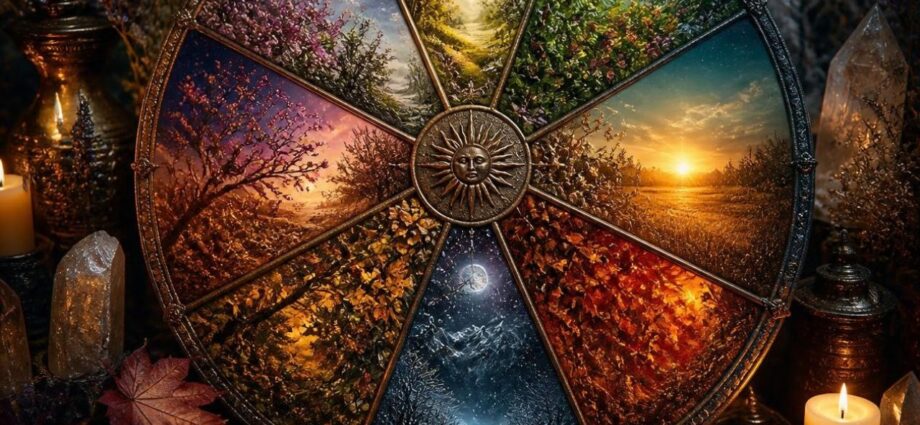
The Wheel of the Year is one of the most beautiful frameworks in spiritual practice — an ancient Celtic calendar that tracks the turning of the seasons through eight sacred festivals, each marking a significant shift in the earth’s energy and the cycle of light and dark.
If you’ve ever felt the pull of the seasons, sensed that certain times of year carry a deeper energy, or wanted to align your spiritual practice with the natural world, the Wheel of the Year is your guide.
What Is the Wheel of the Year?
The Wheel of the Year is a cycle of eight festivals — known as sabbats — that are spread throughout the year, roughly six weeks apart. Together, they trace the journey of the Sun through the seasons, following themes of birth, growth, harvest, death, and rebirth.
The eight festivals are divided into two groups:
The four Greater Sabbats (also called the cross-quarter days) — rooted in Celtic tradition and aligned with the agricultural calendar:
- Samhain (October 31)
- Imbolc (February 1)
- Beltane (May 1)
- Lughnasadh (August 1)
The four Lesser Sabbats (the solar festivals) — aligned with the astronomical turning points of the year:
- Yule — Winter Solstice (~December 21)
- Ostara — Spring Equinox (~March 20)
- Litha — Summer Solstice (~June 21)
- Mabon — Autumn Equinox (~September 22)
Together, these eight festivals create a continuous, ever-turning wheel that connects you to the rhythms of the earth, the cycles of the sun, and the deeper wisdom of the natural world.
Why Work with the Wheel of the Year?
Working with the Wheel of the Year is one of the most grounding and enriching spiritual practices available — and it doesn’t require any specific belief system.
It reconnects you to nature. In modern life, we’ve largely lost our connection to the seasons. The Wheel of the Year restores that connection, reminding you that you are part of the natural world and its cycles.
It gives your spiritual practice a rhythm. Rather than practicing sporadically, the eight festivals give you eight natural anchor points throughout the year — moments to pause, reflect, celebrate, and set intentions.
It mirrors your inner journey. The outer cycle of the seasons reflects an inner cycle of growth, rest, expansion, and release. Working with the Wheel helps you understand and honor where you are in your own personal cycles.
It deepens seasonal magic. Each sabbat carries its own unique energy, themes, and magical correspondences — crystals, colors, herbs, rituals, and intentions that align with that moment in the year.
The Eight Festivals of the Wheel of the Year
🎃 Samhain — October 31
The witch’s new year. The festival of the dead.
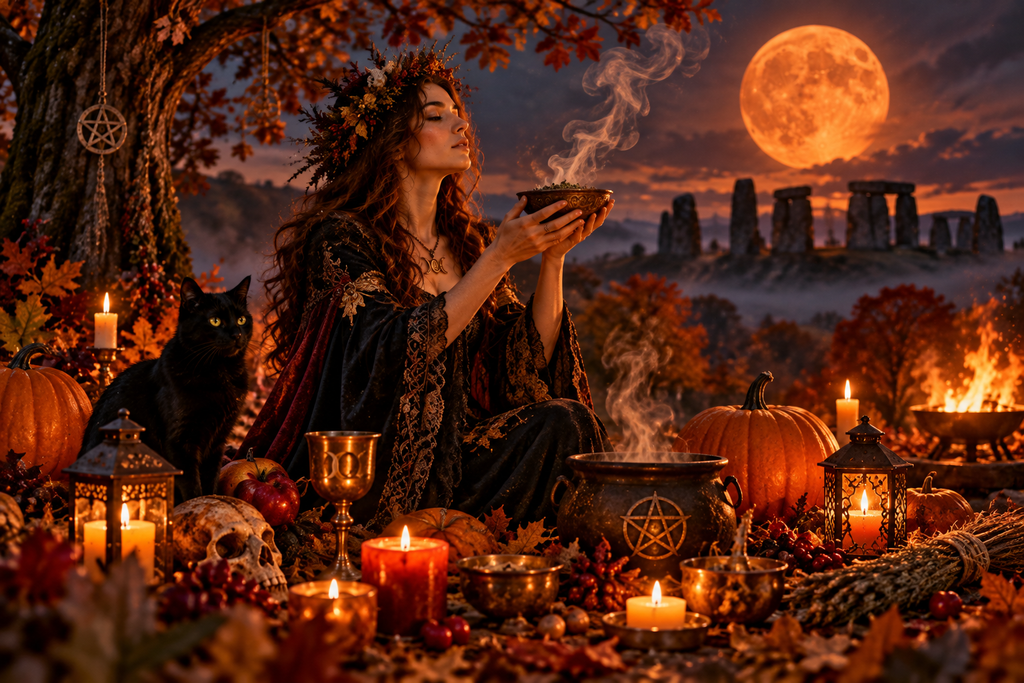
Samhain marks the end of the harvest and the beginning of the dark half of the year. The veil between the living and the dead is at its thinnest, making this the most spiritually potent night of the year.
Themes: Death and rebirth, ancestor veneration, release, the thinning of the veil, shadow work, divination
Crystals: Black tourmaline, obsidian, labradorite, amethyst, smoky quartz
Candle colors: Black, white, deep purple, orange
How to celebrate: Create an ancestor altar, perform a release ritual, practice divination, light candles in honor of those who have passed
☃️ Yule — Winter Solstice (~December 21)
The return of the light. The longest night of the year.
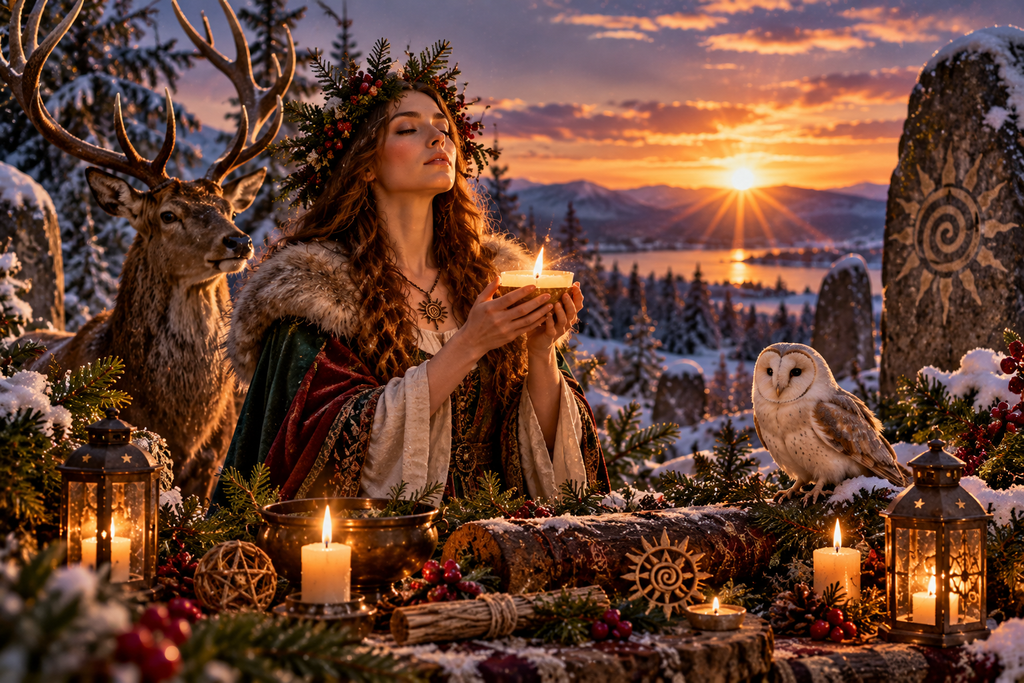
Yule marks the winter solstice — the longest night and the moment when the sun begins its return journey. It’s a celebration of hope, warmth, and the promise of light even in the deepest darkness.
Themes: Rebirth of the sun, hope, inner light, family and community, the return of warmth, gratitude
Crystals: Clear quartz, garnet, ruby, bloodstone, green tourmaline
Candle colors: Red, green, white, gold, silver
How to celebrate: Light candles to welcome the returning sun, decorate with evergreens (holly, mistletoe, pine), burn a Yule log, gather with loved ones, set intentions for the coming year
🕯️ Imbolc — February 1–2
The first stirring of spring. The festival of light.
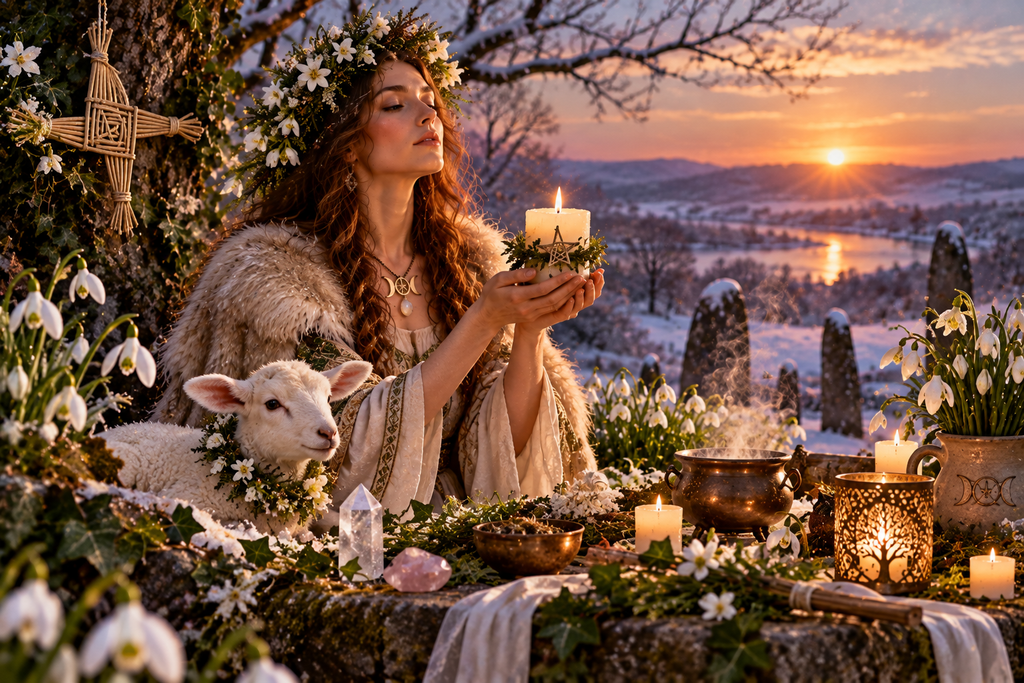
Imbolc marks the midpoint between winter solstice and spring equinox. The earth is still cold, but beneath the surface, the first seeds are stirring. It’s a festival of purification, new beginnings, and the returning light.
Themes: New beginnings, purification, inspiration and creativity, the first signs of spring, hope, healing
Crystals: Amethyst, moonstone, garnet, citrine, clear quartz
Candle colors: White, pale yellow, light blue, pink
How to celebrate: Spring clean your home energetically and physically, light white candles to welcome the returning light, set intentions for what you want to grow in the coming season, make a Brigid’s cross
🌸 Ostara — Spring Equinox (~March 20)
Balance, renewal, and new life. The pagan Easter.
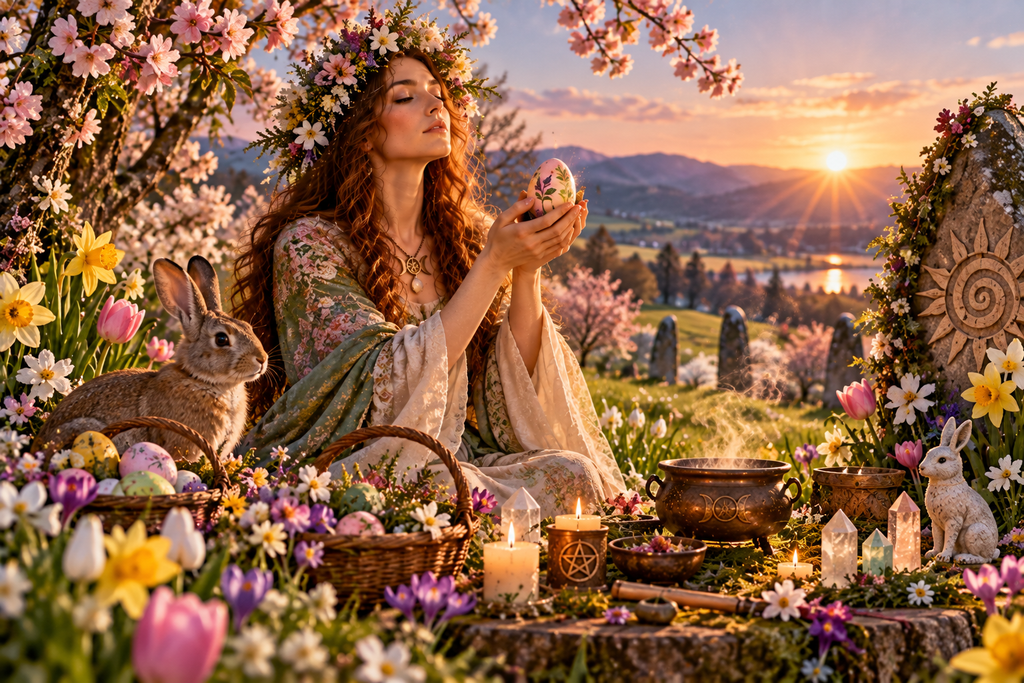
Ostara marks the spring equinox, when day and night are equal and the world is tipping toward light. It’s a festival of fertility, growth, and new beginnings — the pagan roots of many Easter traditions.
Themes: Balance, fertility, new life, growth, planting seeds, rebirth, joy
Crystals: Rose quartz, moss agate, green aventurine, clear quartz, aquamarine
Candle colors: Yellow, green, pink, light purple, white
How to celebrate: Plant seeds (literal or metaphorical), decorate with flowers and eggs, do a spring cleansing ritual, set intentions for growth, spend time in nature
🔥 Beltane — May 1
Fire, fertility, and the full flowering of life. The festival of love.
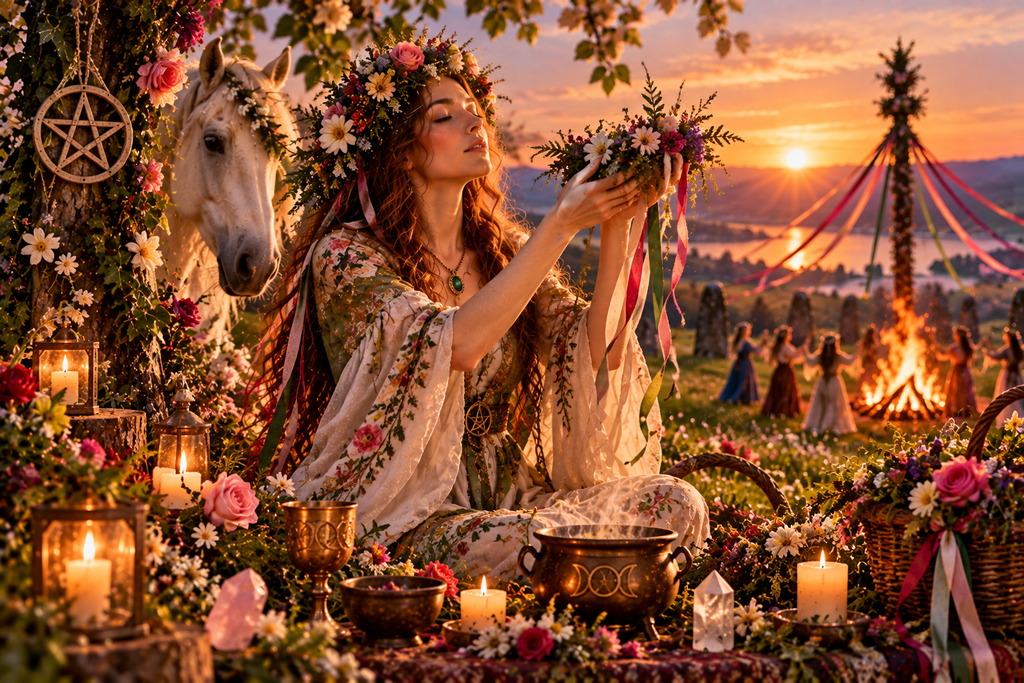
Beltane sits directly opposite Samhain on the wheel, and where Samhain honors death, Beltane celebrates life in its fullest expression. It’s a festival of passion, fertility, love, and the explosive energy of May.
Themes: Love and passion, fertility, fire and transformation, abundance, creativity, the union of masculine and feminine energies
Crystals: Rose quartz, carnelian, garnet, emerald, malachite
Candle colors: Red, pink, green, white, gold
How to celebrate: Light a bonfire or candles, wear flowers in your hair, dance, make love offerings, set intentions around love and creativity, celebrate abundance
☀️ Litha — Summer Solstice (~June 21)
The peak of the sun’s power. The longest day of the year.
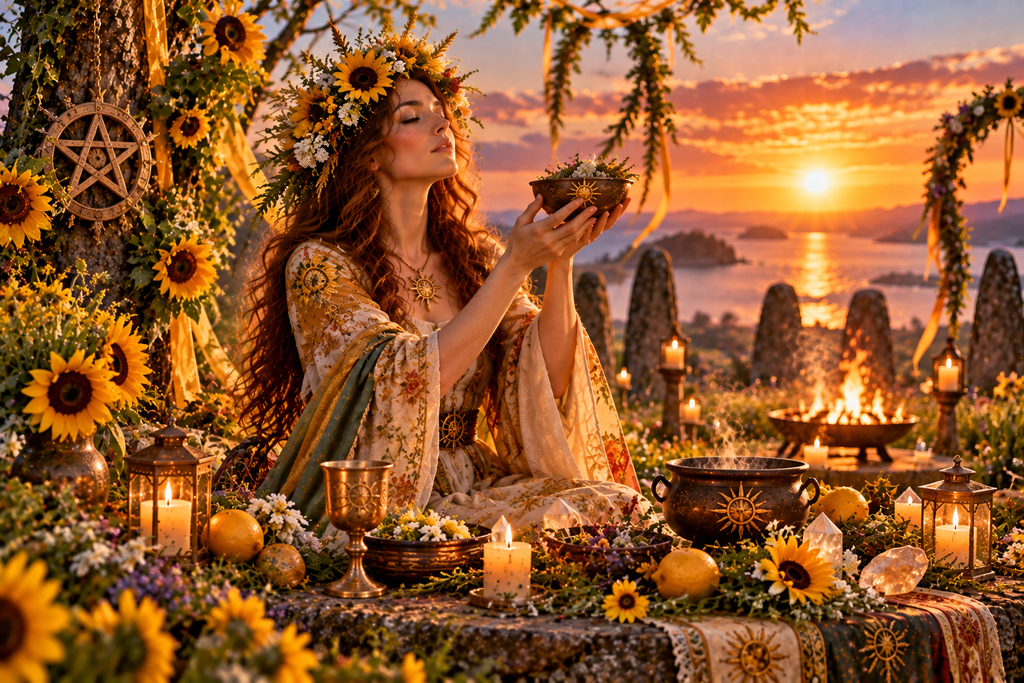
Litha marks the summer solstice — the height of the sun’s power and the longest day of the year. From this point, the days begin to shorten again. It’s a time of celebration, magic, and gathering the full power of the light before it begins to wane.
Themes: Solar power, abundance, joy and celebration, the height of growth, magic and manifestation, gratitude
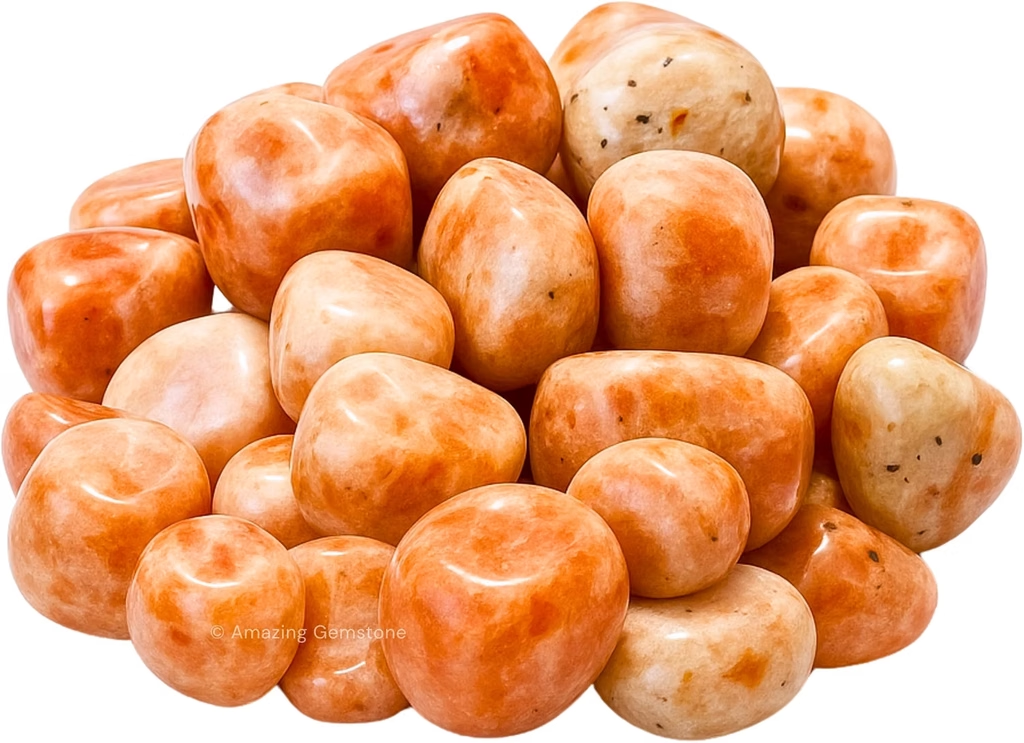
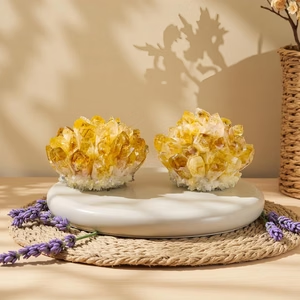
Crystals: Sunstone, citrine, tiger’s eye, carnelian, amber
Candle colors: Yellow, gold, orange, red, white
How to celebrate: Watch the sunrise, light a bonfire, work with solar magic, make a gratitude list for all that has grown since Yule, charge your crystals in the sun
🌾 Lughnasadh (Lammas) — August 1
The first harvest. The beginning of the end of summer.
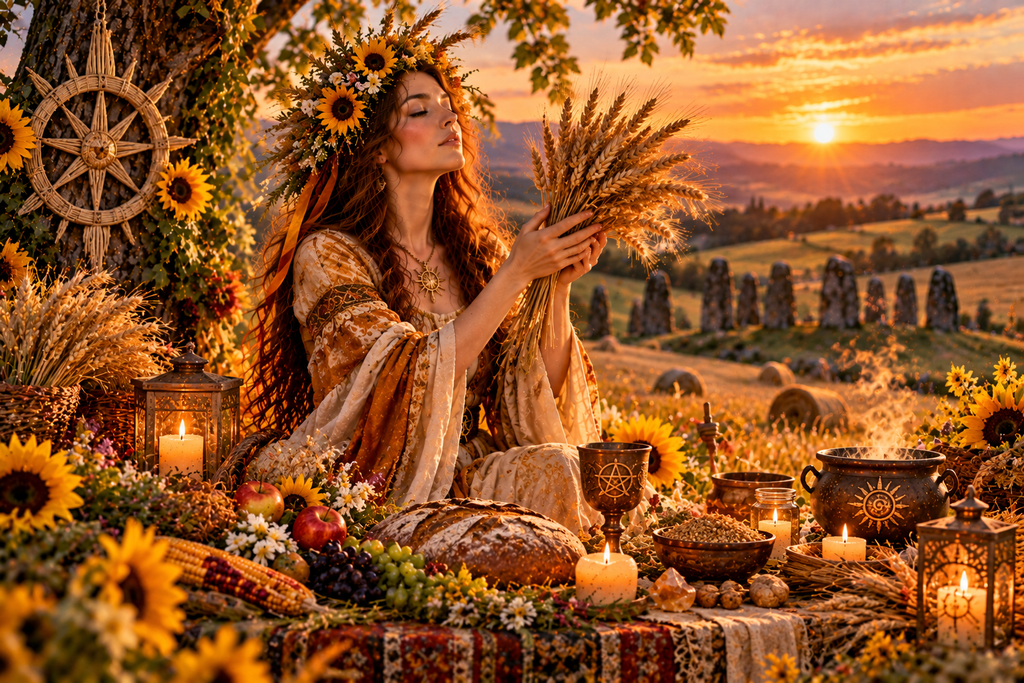
Lughnasadh marks the first of three harvest festivals and the beginning of the harvest season. The days are noticeably shorter now, and the first grain is ready to be gathered. It’s a time of gratitude, abundance, and beginning to prepare for the darker months ahead.
Themes: First harvest, gratitude, abundance, sacrifice and transformation, the beginning of letting go, skills and craftsmanship
Crystals: Peridot, citrine, amber, carnelian, goldstone
Candle colors: Gold, orange, yellow, brown, green
How to celebrate: Bake bread, make offerings of first fruits and grains, give thanks for the abundance in your life, begin reflecting on what you’re ready to harvest and what you’re ready to release
🍂 Mabon — Autumn Equinox (~September 22)
The second harvest. Balance and thanksgiving.
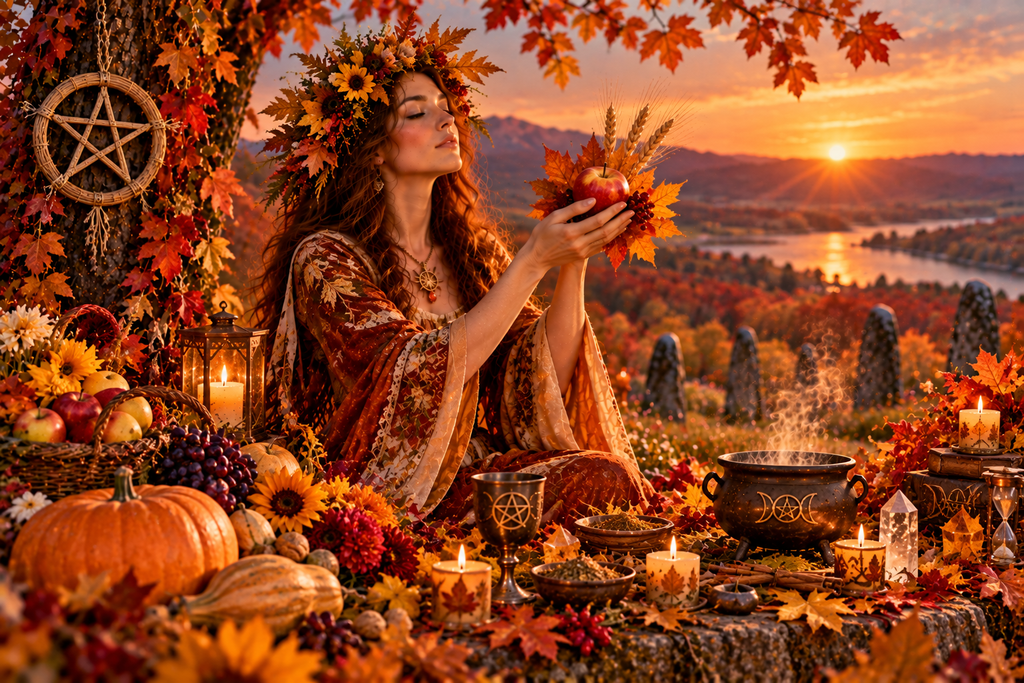
Mabon marks the autumn equinox — the second moment of balance in the year, when day and night are again equal before the darkness takes over. It’s the pagan equivalent of Thanksgiving, a time of gratitude for the harvest and preparation for the coming winter.
Themes: Balance, gratitude, the second harvest, letting go, preparation, reflection, the turn toward darkness
Crystals: Citrine, amber, obsidian, tiger’s eye, moss agate
Candle colors: Orange, brown, gold, deep red, burgundy
How to celebrate: Give thanks for the abundance in your life, make an autumn altar with harvest fruits and leaves, begin releasing what no longer serves you, spend time in nature among the turning leaves
How to Start Working with the Wheel of the Year
You don’t need to celebrate all eight festivals immediately. Here are some simple ways to begin:
Start with the season you’re in. Notice what sabbat is coming next and research its themes. Even a simple acknowledgment — lighting a candle, spending time in nature, or journaling about the season’s themes — is a meaningful beginning.
Create a seasonal altar. Update a small space in your home with objects, colors, and crystals that reflect the current season and sabbat. This is a beautiful, ongoing practice that keeps you connected to the wheel throughout the year.
Journal with the themes. Each sabbat comes with rich themes for reflection. Use the themes listed above as journal prompts during each seasonal shift.
Build a crystal collection aligned with the wheel. Over time, gather crystals that correspond to each sabbat. Working with them during the appropriate festival deepens your connection to the seasonal energy.
The Wheel of the Year and the Moon
The Wheel of the Year tracks the solar cycle, but many practitioners also work with the lunar cycle alongside it. Following both the new and full moons as additional points of intention-setting and release throughout the year.
The two cycles work beautifully together: the solar wheel offers the larger, seasonal framework, while the lunar cycle provides more frequent, monthly opportunities to align your energy and intentions.
Final Thoughts
The Wheel of the Year is not a religion — it’s a framework. A way of moving through time with awareness, intention, and connection to the world around you. Whether you celebrate all eight sabbats or simply pause to acknowledge the solstices and equinoxes, working with this ancient wheel will deepen your relationship with the seasons, with yourself, and with the great cycles of life, death, and rebirth that are always turning beneath the surface of things.
The wheel is always turning. The question is whether you’re turning with it.
Ready to deepen your seasonal spiritual practice? [Explore our activation journals →]